mum&gypsy
Curtain Call
“CurtainCall” Interview with Takahiro Fujita
2025/12/04

Text: Tomofumi Hashimoto translation:Miwa Monden
— I’d like to record this interview as a guide for overseas audiences who are encountering mum&gypsy’swork for the first time. To begin, could you tell us how the name “mum&gypsy” originated?
Fujita: When we staged our first production in, I chose the name because I imagined myself as the“mum” — the origin or “mother body” of the work — and then se ing o on a journey together with it.
—You’ve long said that mum&gypsy isn’t a theatre “company” with a fixed membership, but rather a“project” that brings together di erent actors and sta for each work, correct?
Fujita: at’s right. Even though I insisted “it’s not a theatre company,” a kind of collective identity did emerge as our careers evolved. But recently that sense of collectiveness has begun to loosen, and I find that quite comfortable.
—Has your approach changed in tandem with your career?
Fujita: In my twenties, I was desperately focused on ge ing my own projects o the ground. I was the “mother,” with a clear vision of the work I wanted to make — and my mind was constantly on the journey ahead: who I would meet, what experiences I would encounter. But recently, I’ve realized I’m no longer the only “mother” of the work.
—What do you mean by that?
Fujita: These days, it’s more common for a work to start with some kind of external foundation — a story I came across while traveling, or an existing piece of writing. With this production, I first chose what would serve as its core and then thought about the journey that would unfold from it.
—In your twenties you made works inspired by your hometown. Later you began travelling and creating pieces based on fieldwork. Within that trajectory, why did you choose to create “Curtain Call”, which takes theatre itself as its subject?
Fujita: As you mentioned, recently I’ve created many works based on research. I’d hear the same phrases repeatedly, read the same materials repeatedly — I was listening for what resonated with me. And even when the work isn’t research-based, writing a narrative means listening closely to today’s world and to people’s voices. But for this piece, I wasn’t thinking that way. I’ve only ever done theatre — wherever I go, that’s what I’m thinking about. So, in this work, the actors tell a story that only I know, and the audience listens.
—So whereas before you were listening to other people’s voices, this time “you” are the one speaking?
Fujita: Yes. In the same way that there are people who struggle with how to speak about the war they lived through, this is the first time I’ve asked myself how to speak about the theatre I’ve envisioned throughout my life. I feel I’ve wri en something that comes entirely from me — a story only I know. So, this piece is profoundly important to me.
—It sounds more personal than your previous works. Why did you feel the need to share such a personal piece with international audiences now?
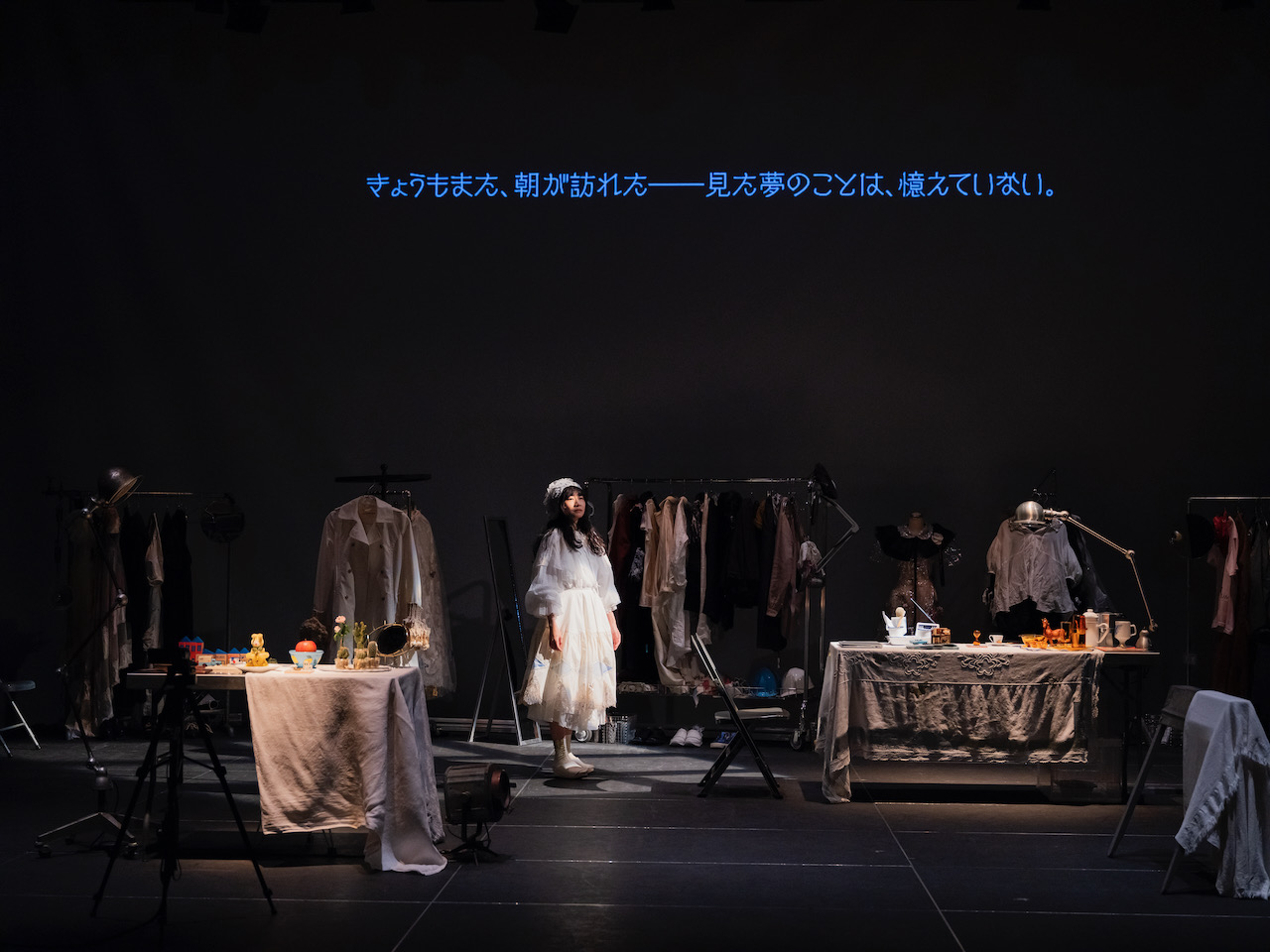
Fujita: Looking at the current global situation, the world is moving at such a dizzying pace that reality seems ready to overtake fiction. I’ve long thought about how theatre might illuminate that, and in recent years I may have made too many works driven by that idea. Compared to those, this piece is understated — it simply follows “the moments spent to go to the theatre preparing to have a performance.” In other words, it doesn’t depict “place” or “society,” but individuals.
—Individuals?
Fujita: Something more personal, yes. But precisely because it’s personal, I believe it can resonate with each audience. e story — preparing for a show — might sound specific, but preparing for “anything” is a universal experience. is work is about something deeply important to me: expression. at’s why I want to bring this piece to share it in many places.
—Your work has a unique charm that may be di icult for overseas audiences to grasp. How do you perceive that charm?
Fujita: In this piece, I intentionally included many “Japanese” words. I actually don’t like things that are typically considered Japanese.
—Your hometown is Hokkaido, at Japan’s northernmost tip — a landscape quite di erent from what’s usually called “Japanese.” Is that where this dislike comes from?
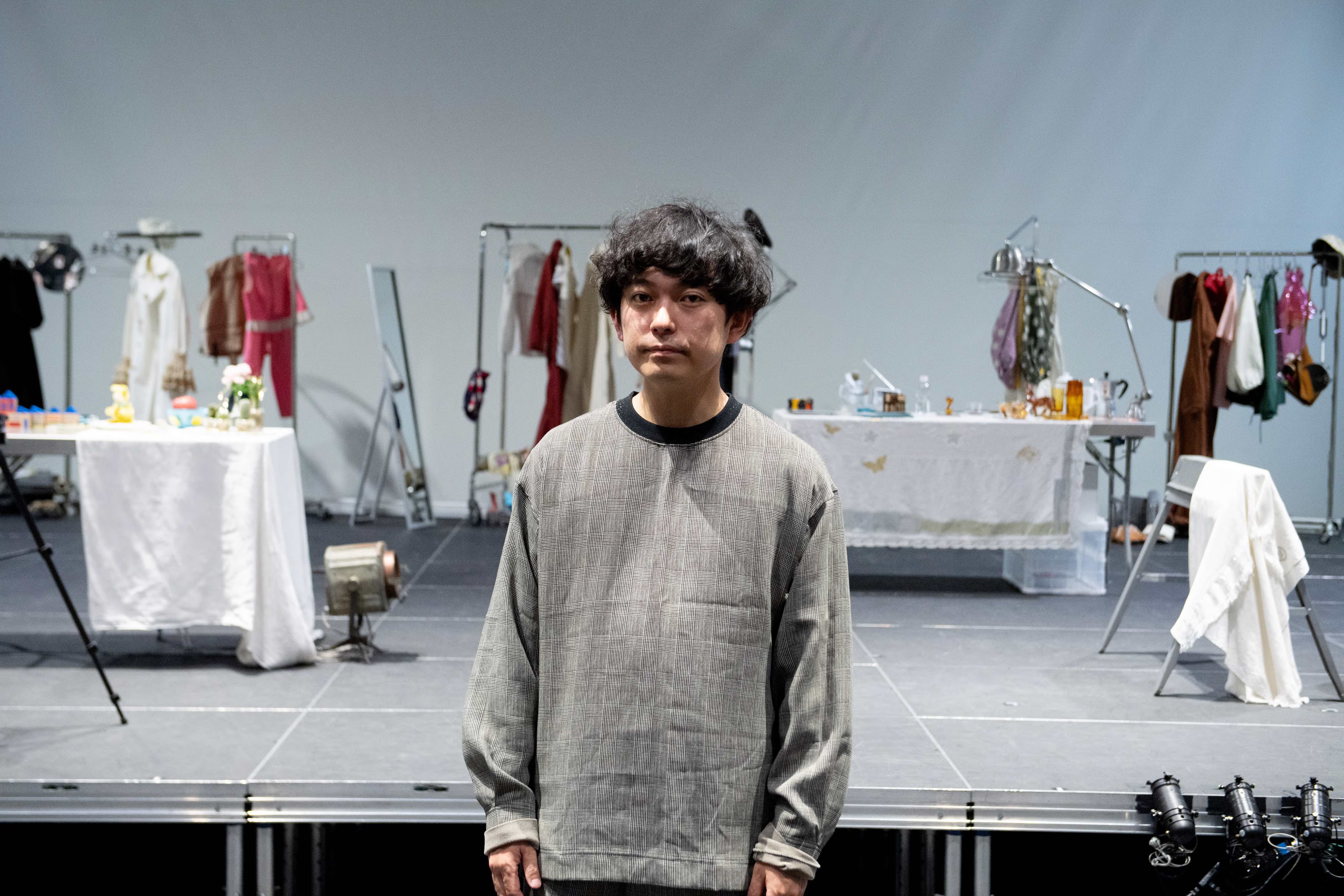
Fujita: Exactly. But incorporating “Japanese” elements in my own way was interesting — seeing how they’re translated. For example, “Kameda Seika” (a Japanese snack brand) rice crackers become “Kameda crisps” in the subtitles. When I watch foreign programs, I get curious about snacks I’ve never heard of — I don’t know their taste, but they contain that country’s essence. That’s why I included expressions like that. Though it might be a bit awkward if someone points them out.
—That sounds like a uniquely Japanese sense of humor. is production also has distinctly Japanese theatrical touches, doesn’t it?
Fujita: Yes, like “Why prepare two kinds of bento?” (laughs) Or “Why are the production working so hard?” Or “ ey must be exhausted if they’re making these many mistakes!” And honestly — that’s true.
—Since your first overseas performance in Italy in 2013, you’ve staged many international productions. What are your thoughts now on communicating your words through subtitles?
Fujita: Even for Japanese audiences, some of dialogues are quite fast, so I’ve fine-tuned that over time —balancing dialogue and monologue. With subtitles, you realize that if something is only said once, its nuance may not land.
—Related to that, your work is known for its ‘refrain’ technique. What do you hope that refrain conveys now, compared to when you first used it in your twenties?
Fujita: Even when speaking to an audience who understands Japanese, saying something only once makes it difficult to convey fully. Repetition is important. In theatre you can’t rewind like a film — and physiologically speaking, “I” don’t get something a er just one hearing either. So, the “refrain” emerged as a rhythm that makes you want to hear a line again.
When we performed “Chair/IL POSTO” in Italy this autumn, an elderly woman said, “It felt like soothing a baby by repeating the same phrase — very comforting.” at made me so happy. How do you bring the audience to a place where they “want” to hear something again? at’s what I’ve consciously pursued.